Historical Movies: Must-Have Best Ancient History Films
The Essential Guide to Ancient History on Film
Historical movies have a unique power: they bring distant civilizations, legendary rulers, and world-changing conflicts to life in a way that textbooks rarely can. When done well, these films blend spectacle with storytelling, giving viewers a dramatic window into the ancient world. From the sands of Egypt to the arenas of Rome and the battlefields of Greece, the best ancient history films offer more than entertainment—they create an emotional connection to the people, cultures, and ambitions that shaped early civilization.
Why Historical Movies About the Ancient World Still Matter
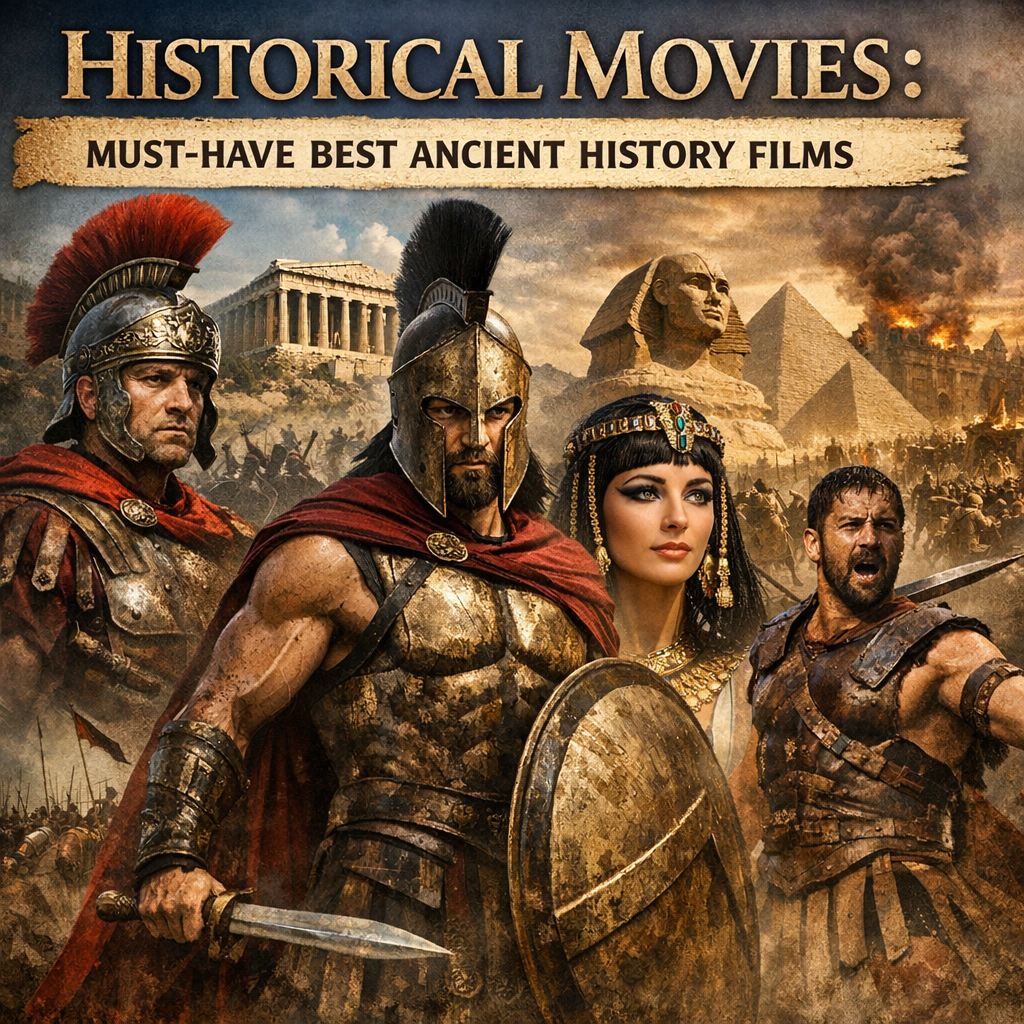
Ancient history continues to fascinate audiences because it deals with timeless human themes. Power, betrayal, conquest, faith, survival, and legacy all appear in these stories, even when the setting is thousands of years removed from modern life. Great films set in antiquity remind us that while armor, empires, and customs may change, human nature often does not.
Another reason these movies remain popular is scale. Ancient settings allow filmmakers to tell stories with grand visuals—massive armies, monumental architecture, lavish palaces, and mythic landscapes. Even viewers who know little about ancient Rome, Greece, Egypt, or Judea can become fully immersed in these worlds through powerful performances and careful production design.
Of course, not every film is fully accurate. Some take creative liberties for dramatic effect, while others focus more on action than historical detail. Still, the strongest entries inspire curiosity and often encourage viewers to learn more about the real events and figures behind the drama.
Best Historical Movies Set in Ancient Times
If you are looking to build a watchlist of unforgettable ancient history films, these are some of the most essential picks.
Gladiator (2000)
Ridley Scott’s Gladiator is one of the most beloved ancient epics ever made. Set in the Roman Empire, the film follows Maximus, a respected general who is betrayed and forced into slavery before rising as a gladiator. While the story is largely fictional, it uses the political atmosphere of imperial Rome to create an emotionally gripping narrative.
The film stands out for its memorable performances, especially Russell Crowe as Maximus and Joaquin Phoenix as Commodus. It also captures the spectacle and brutality of Roman public life, including the grandeur of the Colosseum. For many viewers, this is the movie that reignited interest in large-scale ancient epics.
Ben-Hur (1959)
A classic of classic cinema, Ben-Hur remains one of the defining films of the genre. Set during the early Roman Empire, it tells the story of Judah Ben-Hur, a Jewish prince betrayed by a former friend and driven toward revenge. The film is famous for its emotional depth, religious undertones, and, of course, its legendary chariot race.
What makes Ben-Hur endure is its balance between personal drama and historical atmosphere. It captures the tensions of Roman occupation while keeping the audience invested in one man’s struggle for dignity, justice, and redemption.
Spartacus (1960)
Stanley Kubrick’s Spartacus brings the famous slave revolt against Rome to the screen with passion and power. The film follows Spartacus, played by Kirk Douglas, as he transforms from an enslaved gladiator into the leader of a rebellion.
This is one of the most influential historical epics ever made, not only because of its scale but because of its themes. Freedom, resistance, and sacrifice drive the story, making it feel relevant long after its release. It may not capture every historical detail perfectly, but it succeeds as a moving portrait of defiance against oppression.
Troy (2004)
Inspired by Homer’s Iliad, Troy sits at the border between legend and history. The movie dramatizes the war between the Greeks and Trojans, featuring famous figures like Achilles, Hector, Agamemnon, and Paris. While it simplifies and reimagines elements of the original source, it remains an entertaining and visually impressive look at one of antiquity’s most famous conflicts.
Brad Pitt’s portrayal of Achilles gives the film much of its energy, but the emotional heart of the story lies in its tragic view of war. Honor, pride, and fate all collide in a narrative that feels both epic and deeply personal.
300 (2006)
Though heavily stylized and far from strictly realistic, 300 became iconic for its dramatic depiction of the Battle of Thermopylae. Based on Frank Miller’s graphic novel, the film presents King Leonidas and his Spartan warriors as symbols of courage in the face of overwhelming odds.
This is not the film to watch for careful historical accuracy, but it deserves a place in any ancient history movie discussion because of its cultural impact. Its visual style, intense pacing, and emphasis on heroic resistance made it unforgettable for many audiences.
Cleopatra (1963)
Cleopatra is one of Hollywood’s most famous historical productions, known for its lavish scale and Elizabeth Taylor’s star-making performance as the Egyptian queen. The film explores Cleopatra’s relationships with Julius Caesar and Mark Antony, placing personal ambition and political survival at the center of the narrative.
Its production history is legendary, but the film itself is worth seeing for its ambition, costume design, and sweeping portrayal of a crucial moment in Mediterranean history. It may be long, but it delivers a rich and glamorous version of the ancient world.
The Passion of the Christ (2004)
Though focused on a narrow time frame rather than a sweeping empire, The Passion of the Christ is a powerful ancient-era film centered on the final hours of Jesus. Set in Roman-occupied Judea, it presents a stark and intense depiction of suffering, faith, and sacrifice.
Its emotional impact is undeniable, and its use of ancient languages adds a sense of immersion rarely seen in mainstream cinema. For audiences interested in religious history and the political realities of the time, it remains a significant viewing experience.
What Makes an Ancient History Film Memorable?
The best films in this genre usually share a few key qualities. First, they create a believable world. Costumes, architecture, language choices, and atmosphere all matter when transporting viewers to a distant era. Second, they center on human stories. A film may include emperors, wars, and monuments, but it only truly works if audiences care about the people on screen.
Third, memorable historical storytelling knows how to balance fact and drama. Absolute accuracy is rare, and sometimes impossible, but emotional truth is essential. Viewers can accept invented dialogue or compressed timelines if the film captures the spirit of the age and the stakes of the story.
Final Thoughts
Ancient history films continue to thrive because they combine education, emotion, and spectacle in a way few genres can match. Whether you prefer Roman revenge dramas, Greek war epics, biblical narratives, or palace intrigue in Egypt, there is no shortage of remarkable stories to explore. Some are grounded in documented history, others lean into legend, but the best of them leave a lasting impression.
For anyone building a must-watch list, these classics and modern epics are a strong place to start. They do more than recreate the past—they make it feel immediate, dramatic, and alive.
