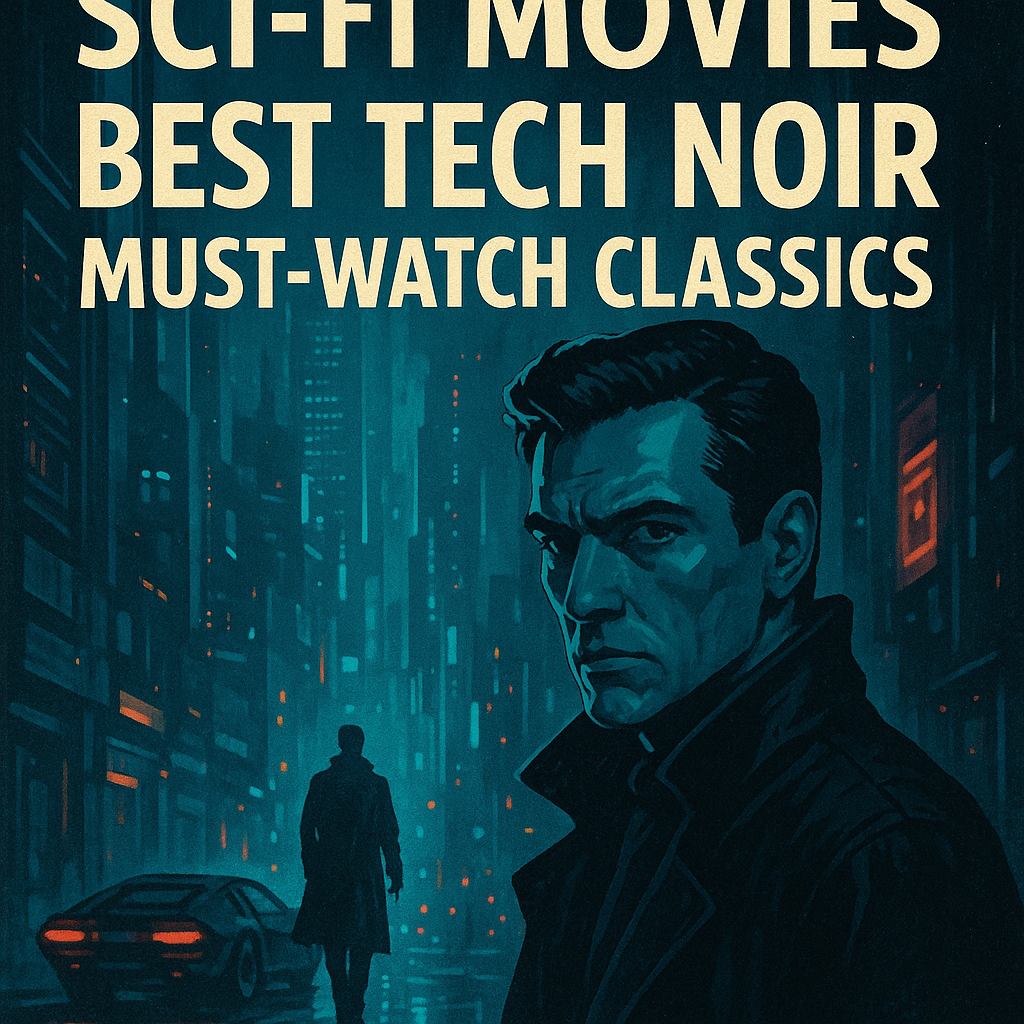
sci fi movies: Best Tech Noir Must-Watch Classics
- What Makes Tech Noir Different?
- Why sci fi movies in the Tech Noir Style Still Matter
- Blade Runner
- The Terminator
- RoboCop
- Ghost in the Shell
- Dark City
- Akira
- Essential Traits Shared by These Classics
- sci fi movies with atmosphere over spectacle
- Human questions inside futuristic worlds
- Futures that feel possible
- Final Thoughts
sci fi movies have long been a mirror for our hopes and fears about the future, but the tech noir corner of the genre adds something darker, sharper, and far more haunting. Blending futuristic technology with noir-style pessimism, these films create worlds where neon lights glow over moral decay, corporations hold terrifying power, and even identity itself becomes uncertain. If you love stories that feel stylish, cerebral, and emotionally charged, tech noir classics deserve a top spot on your watchlist.
What Makes Tech Noir Different?

Tech noir is not just science fiction with cool gadgets. It is a mood-driven style that fuses high-tech settings with noir storytelling. That means shadowy cityscapes, cynical heroes, dangerous femme fatales or morally ambiguous characters, and a constant sense that progress may have come at a terrible cost.
Where traditional science fiction often celebrates discovery, tech noir asks harder questions. What happens when machines become more human than people? Can memory be trusted? Is survival possible in a world run by systems too large to fight? These films often take place in rain-soaked futures, with glowing billboards, crowded streets, and oppressive urban landscapes that feel both fascinating and deeply unsettling.
Why sci fi movies in the Tech Noir Style Still Matter
The lasting appeal of tech noir lies in how relevant it remains. Decades after many of these films were released, their themes feel more urgent than ever. Artificial intelligence, surveillance, bioengineering, virtual identity, and corporate power are no longer distant possibilities. They are part of daily conversation.
That is why these movies continue to resonate. They are not only visually memorable; they also challenge viewers to think about freedom, humanity, and the cost of technological dependence. Great tech noir does not simply predict the future. It warns us about the present.
Blade Runner
Few films define the genre more powerfully than Blade Runner. Set in a polluted, overcrowded Los Angeles of the future, the film follows Rick Deckard, a weary investigator tasked with hunting down replicants—bioengineered beings nearly indistinguishable from humans.
What makes this film essential is not just its iconic design, though its neon haze and towering cityscapes have shaped the look of futuristic cinema for years. It is the emotional and philosophical depth that gives it staying power. The question at the heart of the story is devastatingly simple: if an artificial being can feel fear, longing, and love, what truly separates it from a human?
Its slow pace, reflective tone, and unforgettable imagery make it less of an action film and more of an immersive experience. For anyone exploring tech noir, this is the foundation.
The Terminator
If Blade Runner is meditative tech noir, The Terminator is its relentless, steel-fisted cousin. James Cameron’s classic takes the fear of machines and turns it into pure cinematic momentum. The premise is brilliantly direct: a cyborg assassin is sent from a machine-dominated future to kill Sarah Connor before her unborn son can lead humanity’s resistance.
The film works because it balances sci-fi ideas with noir tension. Nighttime city streets, unstoppable danger, and a grim sense of fate give it a dark, urban edge. Arnold Schwarzenegger’s Terminator is one of cinema’s great techno-nightmares: emotionless, efficient, and terrifyingly unstoppable.
Beneath the action, the movie taps into a core tech noir anxiety: what if the systems we create become impossible to control? It is suspenseful, iconic, and still remarkably effective.
RoboCop
Paul Verhoeven’s RoboCop takes a more satirical approach, but it absolutely belongs among tech noir essentials. Set in a crime-ridden Detroit controlled by corporate greed, the film tells the story of officer Alex Murphy, who is brutally murdered and rebuilt as a cyborg law enforcer.
At first glance, it looks like explosive sci-fi action. But underneath the violence and dark humor is a sharp critique of privatization, media sensationalism, and the dehumanizing effects of technology. Murphy’s struggle to reclaim his identity gives the film surprising emotional power.
Its vision of the future feels exaggerated, yet disturbingly believable. That blend of action, satire, and existential unease is exactly what makes tech noir so effective.
Ghost in the Shell
For anime fans and newcomers alike, Ghost in the Shell is one of the most important tech noir works ever made. This animated landmark follows Major Motoko Kusanagi, a cyber-enhanced operative investigating crimes in a world where the line between body and machine has nearly disappeared.
The film’s visual atmosphere is mesmerizing: dim urban skylines, reflective surfaces, digital overlays, and moments of eerie silence that make the future feel both beautiful and alien. More importantly, it dives deeply into questions of selfhood. If your memories can be altered and your body replaced, what exactly are you?
This is a more contemplative entry, but it is essential viewing for anyone interested in the philosophical side of sci-fi.
Dark City
Often overlooked, Dark City is a must-watch for viewers who enjoy mystery layered with surreal, nightmare-like imagery. The story follows a man who wakes up with no memory and soon discovers that the city around him is manipulated by strange beings who reshape reality itself.
The film leans heavily into noir aesthetics: trench coats, deep shadows, labyrinthine streets, and a protagonist caught in a web of uncertainty. At the same time, it explores memory, control, and the construction of identity in deeply sci-fi terms.
What makes Dark City stand out is its dreamlike intensity. It feels like a lost memory, or a paranoid thought brought to life. For fans of moody, mind-bending storytelling, it is unforgettable.
Akira
While Akira often gets discussed as cyberpunk first, its dark urban setting, political unrest, and destructive relationship with technology make it a natural recommendation here. Set in Neo-Tokyo, the film combines teenage rebellion, government experimentation, and apocalyptic power in a way that feels chaotic and visionary.
Its energy is different from the slow burn of some tech noir films, but the underlying themes fit perfectly. The city is unstable, institutions are corrupt, and technological intervention leads not to progress but catastrophe. Visually and emotionally, it remains one of the boldest animated sci-fi experiences ever made.
Essential Traits Shared by These Classics
sci fi movies with atmosphere over spectacle
One thing these films have in common is their commitment to atmosphere. Even when action is present, mood comes first. Light, shadow, sound, and setting are used to create unease and immersion.
Human questions inside futuristic worlds
The best examples are never just about machines or gadgets. They are about memory, mortality, free will, and identity. Technology is the lens, but humanity is the subject.
Futures that feel possible
These stories often seem exaggerated at first, yet their fears are grounded in reality. That is why they stay with us. They reflect concerns about control, isolation, and the erosion of individuality.
Final Thoughts
Tech noir classics remain some of the most stylish and thought-provoking films in the science fiction landscape. They offer more than futuristic visuals. They create rich, uneasy worlds where every innovation carries a shadow, and every answer leads to a deeper question.
If you are building a watchlist, start with the essentials mentioned above and pay attention to how each film uses technology not just as a plot device, but as a source of tension, beauty, and existential dread. The best ones do not simply entertain. They linger in your mind, making you wonder whether the future they imagined is already beginning to arrive.