Crime Movies: Best Must-Watch Mafia Films Ranked
The Ultimate Ranking of Mafia Films You Need to See
Crime movies have a unique power to pull viewers into worlds built on loyalty, betrayal, ambition, and violence. Few subgenres are as gripping as mafia cinema, where family ties and criminal empires collide in stories that feel both intimate and epic. From timeless classics to modern masterpieces, the best mob films do more than entertain—they shape pop culture, influence filmmakers, and leave behind unforgettable characters.
Below is a ranked list of must-watch mafia films, chosen for their storytelling, performances, atmosphere, and lasting impact.
Why crime movies about the mafia remain so popular
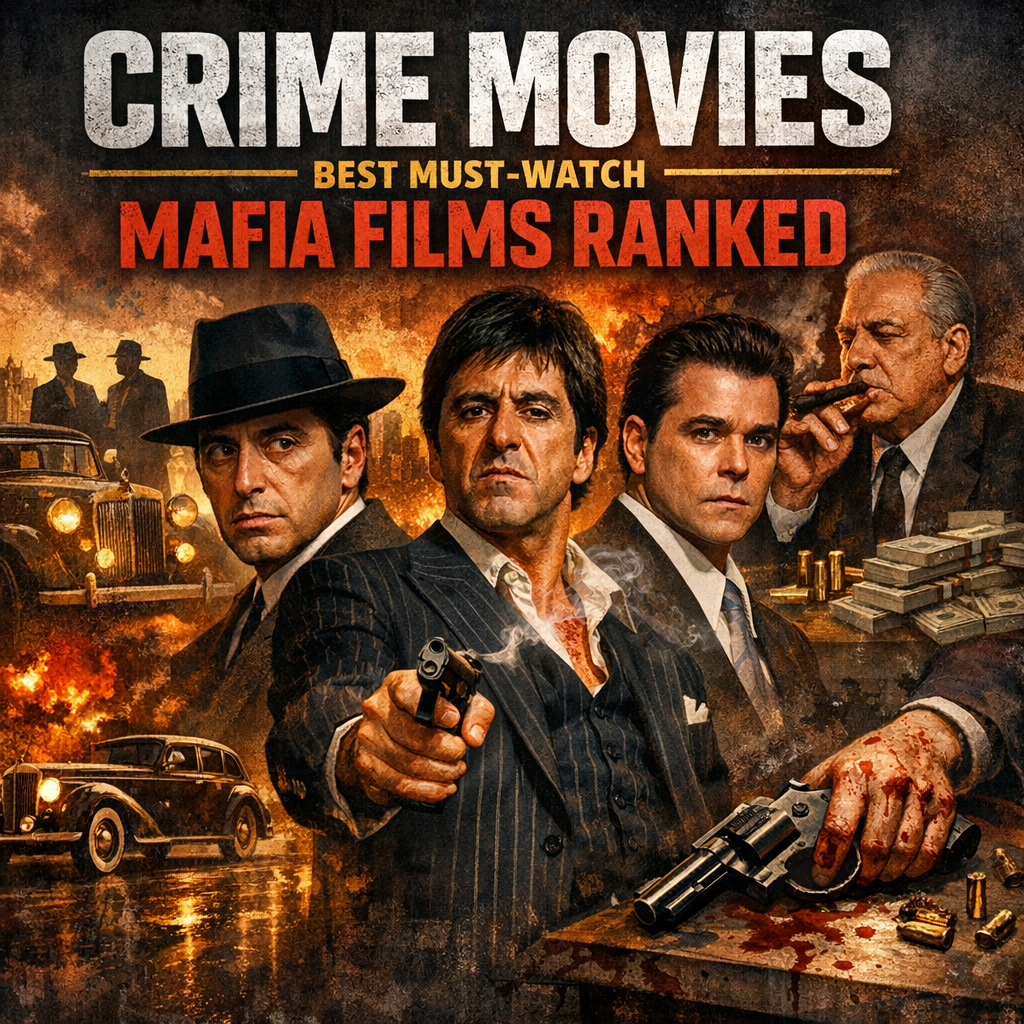
There is something endlessly fascinating about organized crime on screen. Mafia stories often explore power in its purest form: who has it, who wants it, and what it costs to keep it. At the same time, these films are rarely just about crime. They are about family, identity, loyalty, greed, and the collapse that comes when those forces turn against each other.
The best entries in the genre balance style with substance. They may feature shootouts, secret meetings, and dramatic betrayals, but the real tension often comes from character decisions. That is why great mafia films stay relevant across generations.
Best crime movies ranked: the must-watch mafia list
1. The Godfather (1972)
If there is one film that defines the mafia genre, it is The Godfather. Directed by Francis Ford Coppola, this landmark film follows the Corleone family as power shifts from aging patriarch Vito Corleone to his reluctant son Michael.
What makes it extraordinary is its depth. It is a gangster story, yes, but it is also a tragic family drama about inheritance, corruption, and moral transformation. Marlon Brando and Al Pacino deliver iconic performances, and nearly every scene feels carefully crafted.
This is not just one of the greatest mafia films ever made—it is one of the greatest films, period.
2. Goodfellas (1990)
Martin Scorsese’s Goodfellas offers a faster, sharper, and more kinetic look at mob life. Based on the true story of Henry Hill, the film tracks his rise and fall within the world of organized crime.
Unlike the grand, almost operatic style of The Godfather, Goodfellas feels immediate and electric. Its narration, editing, music choices, and dark humor create a thrilling experience from beginning to end. Ray Liotta, Robert De Niro, and Joe Pesci form one of the strongest ensembles in the genre.
If The Godfather shows the myth of the mafia, Goodfellas shows the chaos underneath it.
3. The Godfather Part II (1974)
Sequels rarely equal the original, but The Godfather Part II is one of the rare exceptions. It tells two stories at once: the early rise of Vito Corleone, played brilliantly by Robert De Niro, and the increasingly cold and isolated reign of Michael Corleone.
This dual structure gives the film enormous emotional weight. It contrasts the building of a criminal empire with the spiritual destruction of the man who inherits it. It is richly layered, beautifully acted, and devastating in a way few films manage.
For many viewers, this is every bit as powerful as the first film.
4. Once Upon a Time in America (1984)
Sergio Leone’s Once Upon a Time in America is a sweeping, melancholic crime epic that follows a group of Jewish gangsters over several decades. Rather than focusing only on action or power struggles, the film dives into memory, regret, and the emotional cost of a criminal life.
Robert De Niro anchors the film with a subtle, haunting performance. The pacing is slower than many other mafia movies, but that is part of its strength. It allows the story to feel reflective and tragic.
This is a film for viewers who want something grand, emotional, and unforgettable.
5. Donnie Brasco (1997)
Based on a true story, Donnie Brasco follows an undercover FBI agent who infiltrates the mob and forms a complicated bond with a low-level gangster named Lefty Ruggiero. Johnny Depp and Al Pacino bring real emotional weight to this unusual crime drama.
What makes the film stand out is its human focus. Instead of glamour, it shows the smaller, sadder realities of mob life: aging soldiers, declining influence, and the loneliness behind the criminal code. The relationship at the center of the story makes every scene more intense.
It is one of the most personal and emotionally grounded films in the genre.
6. Casino (1995)
Another Scorsese classic, Casino explores the connection between the mafia and the gambling industry in Las Vegas. With Robert De Niro, Joe Pesci, and Sharon Stone leading the cast, the film tells a story of excess, control, and eventual collapse.
Casino is flashy, brutal, and highly detailed. It shows how organized crime adapts to new environments while still being driven by the same old instincts: greed, pride, and paranoia. Sharon Stone’s performance, in particular, adds a layer of emotional volatility that makes the film even more memorable.
While often compared to Goodfellas, it stands on its own as a darker and more sprawling portrait of mob power.
7. A Bronx Tale (1993)
Directed by Robert De Niro, A Bronx Tale is a coming-of-age mafia film with a strong emotional core. Set in the Bronx in the 1960s, it follows a young boy torn between the honest values of his father and the seductive influence of a local mob boss.
This film succeeds because it is less about organized crime itself and more about how that world shapes young minds. Chazz Palminteri is excellent as Sonny, a gangster who is charismatic but dangerous, while De Niro provides a grounded counterweight as the boy’s hardworking father.
It is thoughtful, warm, and one of the most underrated entries in the genre.
8. The Irishman (2019)
The Irishman brings together Martin Scorsese, Robert De Niro, Al Pacino, and Joe Pesci for a reflective look at crime, aging, and remorse. The story follows Frank Sheeran, a hitman who becomes involved with powerful mob figures and union leader Jimmy Hoffa.
Rather than celebrating the criminal life, this film strips away its glamour. It is quiet, mournful, and deeply concerned with what remains when power fades and time catches up with everyone. Joe Pesci’s restrained performance is especially remarkable.
This is a mafia film that feels like a meditation on the entire genre.
What makes the best crime movies stand out?
Character depth matters more than action
The most memorable mafia films are driven by people, not just plot. Audiences remember Michael Corleone, Tommy DeVito, Lefty Ruggiero, and Frank Sheeran because they feel real, complicated, and morally conflicted.
Atmosphere is everything in crime movies
Whether it is the dark elegance of a family wedding, the neon shine of Las Vegas, or the smoky backrooms where deals are made, setting plays a major role in mafia storytelling. Great directors use atmosphere to pull viewers deeper into the world.
Consequences give the genre its power
The strongest mob films never make crime look simple. Even when they show wealth, status, and influence, they also reveal the damage beneath the surface. Betrayal, fear, broken families, and loneliness are always close behind.
Final thoughts
Mafia cinema continues to endure because it combines tension, emotion, and larger-than-life characters with deeply human themes. These stories may revolve around crime, but their true focus is often the price of ambition and the fragility of loyalty.
If you are building a watchlist, start with The Godfather and Goodfellas, then move through the rest of the rankings for different perspectives on organized crime. Some are epic and operatic, others intimate and reflective, but all of them show why crime movies remain one of the most compelling corners of film history.
