Horror Movies: Best Must-Watch Psychological Horror Masterpieces
Horror Movies: Best Must-Watch Psychological Horror Masterpieces
Horror movies have a unique power to unsettle us long after the credits roll, but psychological horror takes that experience to another level. Instead of relying only on jump scares, gore, or monsters in the dark, this subgenre gets under the skin by targeting fear itself—paranoia, grief, guilt, obsession, and the terrifying possibility that the mind cannot be trusted. The best psychological horror films linger because they force viewers to question what is real, what is imagined, and what darkness may be hidden inside ordinary people.
What makes these films so memorable is their ability to create dread through atmosphere, character, and ambiguity. A hallway becomes menacing, a whispered conversation feels threatening, and a familiar home turns into a prison. These stories often blur the line between external danger and internal collapse, making them some of the most intelligent and emotionally intense entries in cinema.
Why Psychological Horror Feels So Different
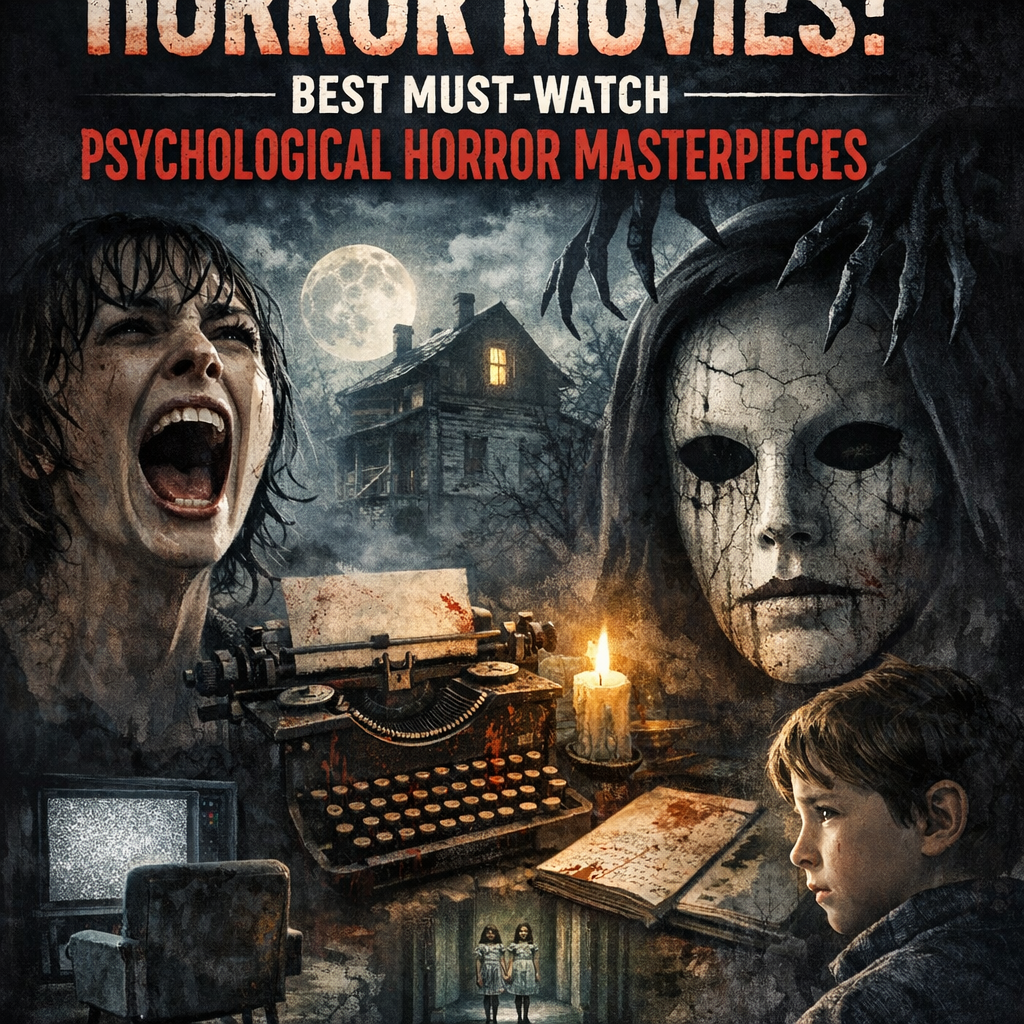
Psychological horror works because it taps into fears that are deeply personal. Instead of presenting a clear monster, it often suggests that the greatest threat may come from trauma, isolation, memory, or the mind itself. This creates a more intimate kind of terror. Viewers are not just watching characters being chased—they are watching them unravel.
Another reason the subgenre stands out is its unpredictability. Traditional horror often follows a recognizable formula, but psychological stories thrive on uncertainty. They invite audiences to interpret clues, question motives, and sit with discomfort. That slow-building tension is often far more disturbing than anything shown directly on screen.
Must-Watch Horror Movies for Psychological Chills
If you want films that are haunting, layered, and unforgettable, these are some of the finest examples of psychological horror.
1. The Shining (1980)
Stanley Kubrick’s adaptation of Stephen King’s novel remains one of the most iconic psychological horror films ever made. Set in the isolated Overlook Hotel, the story follows Jack Torrance and his family as the winter season traps them in a place filled with eerie visions and growing madness.
What makes this film so effective is not just the supernatural presence, but the slow destruction of Jack’s sanity. The cold visuals, unsettling score, and strange, dreamlike pacing create an atmosphere of dread that never lets up. It is a masterclass in turning space, silence, and repetition into fear.
2. Black Swan (2010)
Darren Aronofsky’s Black Swan explores perfectionism, identity, and self-destruction through the story of Nina, a ballerina pushed to extremes while preparing for a major performance. As pressure mounts, her grip on reality begins to fracture.
This film stands out because it transforms ambition into horror. The body horror elements are disturbing, but the real terror lies in Nina’s mental breakdown. The movie captures how obsession can consume a person from the inside, making it both emotionally intense and deeply unsettling.
3. Hereditary (2018)
Ari Aster’s Hereditary is one of the most discussed modern entries in psychological horror. At its core, it is a film about grief and family trauma, but it evolves into something much darker and more overwhelming.
What makes it exceptional is the way it builds dread through emotional pain. Every performance feels raw, especially Toni Collette’s, and the sense of doom grows steadily from scene to scene. Even before the more overt horror elements arrive, the film feels unbearable in the best possible way.
4. The Babadook (2014)
Jennifer Kent’s The Babadook is not only terrifying but emotionally rich. The story follows a widowed mother and her troubled son as a sinister presence enters their home through a mysterious children’s book.
The film works brilliantly as both a monster story and a portrait of unresolved grief, exhaustion, and depression. The horror becomes more powerful because it reflects something real and painful. Few films capture the psychological weight of motherhood and loss with such intensity.
5. Rosemary’s Baby (1968)
Roman Polanski’s Rosemary’s Baby remains one of the defining psychological horror films because of how carefully it builds paranoia. Rosemary begins to suspect that the people around her may have sinister intentions, but the brilliance of the film lies in how long it keeps the viewer questioning everything.
The apartment setting feels claustrophobic, the performances are subtle, and the tension is rooted in manipulation and control. It is a chilling reminder that psychological horror can be most effective when fear grows quietly.
What Makes These Horror Movies Endure
The best psychological horror films remain relevant because they are not built only around shocks. They deal with timeless themes: isolation, family conflict, guilt, repression, ambition, and the fragility of identity. That emotional depth gives them replay value and critical staying power.
These films also trust the audience. They do not always explain everything clearly, and that ambiguity is part of the experience. A disturbing image, a lingering silence, or an unresolved ending can be more powerful than a full explanation. Instead of giving viewers easy answers, they leave space for interpretation—and for fear to continue after the film ends.
Hidden Gems Worth Exploring
While the classics deserve their reputation, there are also lesser-known psychological horror films that fans should not miss.
Session 9 (2001)
Set in an abandoned asylum, this film uses atmosphere and suggestion to create relentless dread. It is slow, quiet, and deeply unnerving.
Saint Maud (2019)
A disturbing study of religious obsession and loneliness, Saint Maud is intimate, intense, and unforgettable.
Repulsion (1965)
This classic depicts a woman’s mental collapse with terrifying precision. The use of sound, isolation, and hallucination makes it deeply effective.
How to Choose the Right Psychological Horror Film
Not every viewer wants the same kind of fear. Some prefer slow-burn tension, while others like surreal imagery or disturbing emotional themes. If you enjoy family drama mixed with terror, Hereditary and The Babadook are great choices. If you prefer elegant, visually striking films about obsession, Black Swan is ideal. For classic paranoia and atmosphere, Rosemary’s Baby and The Shining are essential.
It also helps to know that psychological horror can be intense without being graphic. Many of the strongest films in the genre rely more on mood than violence, making them perfect for viewers who want something disturbing and intelligent rather than purely brutal.
Final Thoughts on Horror Movies That Stay With You
Psychological horror succeeds because it reaches beyond surface-level scares. It unsettles the imagination, plays with perception, and transforms ordinary emotions into something terrifying. The finest films in this space do more than frighten—they provoke thought, invite discussion, and leave lasting images in the mind.
For anyone looking to explore horror movies that offer depth as well as dread, psychological masterpieces are some of the most rewarding films to watch. They prove that the scariest things are not always monsters in the shadows, but the hidden fears, memories, and impulses we carry within us.
