Psychological Movies: Best Must-Watch Psychological Horror Movies
Psychological Movies: Best Must-Watch Psychological Horror Movies
Psychological movies have a unique way of getting under your skin. Instead of relying only on jump scares, gore, or loud sound effects, they play with fear in a deeper and more lasting way. They blur the line between reality and illusion, force viewers to question what is true, and often explore guilt, trauma, obsession, paranoia, and the darkest corners of the human mind. That is exactly why psychological horror remains one of the most powerful and memorable forms of cinema.
What makes these films so compelling is their ability to create dread from ordinary situations. A quiet hallway, a strange smile, an unreliable narrator, or a character’s slow mental unraveling can feel more terrifying than any monster. The best entries in this genre stay with you long after the credits roll because they make you think as much as they make you fear.
Why Psychological Movies Feel So Intense
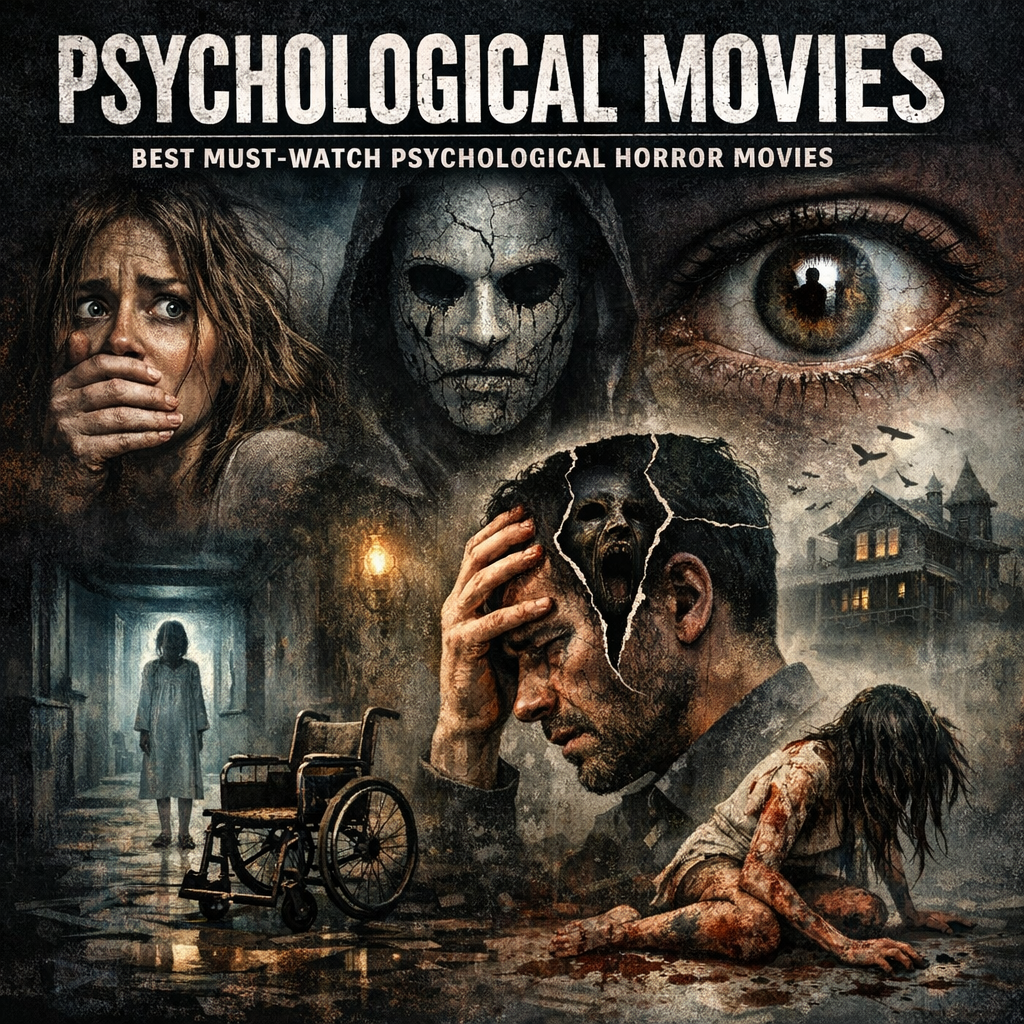
Unlike traditional horror that often depends on visible threats, psychological movies focus on internal conflict. The fear comes from uncertainty. Is the character actually in danger, or are they losing control? Is the haunting supernatural, or is it rooted in grief and trauma? That tension keeps viewers emotionally invested.
These films also tend to be richer in symbolism and character development. They do not simply want to scare you for two hours; they want to pull you into a mental maze. Many of the most respected horror films ever made belong to this category because they combine strong storytelling with emotional depth.
Best Psychological Movies Every Horror Fan Should Watch
Here are some standout films that define the genre and continue to influence audiences and filmmakers alike.
1. The Shining (1980)
Stanley Kubrick’s The Shining is often considered one of the greatest psychological horror films ever made. Set in the isolated Overlook Hotel, the story follows Jack Torrance as he slowly descends into madness while his family becomes trapped with him.
What makes this film so disturbing is not just the supernatural presence in the hotel, but the way it portrays mental deterioration. The empty spaces, eerie silence, and unsettling visuals create a constant sense of unease. Even viewers who know the plot still feel the tension build scene by scene.
2. Black Swan (2010)
Darren Aronofsky’s Black Swan is a brilliant example of how ambition and obsession can turn into horror. Nina, a dedicated ballerina, is pushed to perfection until her identity begins to crack under pressure.
This film works so well because it mixes beauty with terror. The elegant world of ballet becomes increasingly claustrophobic as Nina’s paranoia grows. The body horror elements are effective, but the real fear comes from watching a person lose her grip on reality in pursuit of impossible standards.
3. Hereditary (2018)
Ari Aster’s Hereditary is emotionally devastating and deeply unsettling. On the surface, it follows a family dealing with loss after the death of a secretive grandmother. As the story unfolds, grief gives way to shocking revelations and overwhelming dread.
This film stands out because it uses family trauma as the foundation of its horror. The performances are raw and believable, especially Toni Collette’s. Rather than rushing toward scares, it patiently builds an atmosphere of doom. It leaves viewers disturbed not only by what happens, but by what it says about inherited pain and powerlessness.
4. The Babadook (2014)
The Babadook is one of the smartest modern horror films because it treats fear as something emotional and personal. The story centers on a widowed mother and her troubled son, whose lives are disrupted by a strange figure from a children’s book.
What makes the film so memorable is its layered meaning. It can be read as a monster story, but also as a portrait of depression, grief, and suppressed rage. The horror feels intimate because it grows from everyday exhaustion and emotional isolation.
5. Shutter Island (2010)
Directed by Martin Scorsese, Shutter Island blends mystery, thriller, and psychological horror. Leonardo DiCaprio plays a U.S. Marshal investigating a disappearance at a remote psychiatric institution, only to uncover a web of disturbing truths.
The film thrives on atmosphere and uncertainty. Storms, locked wards, and fragmented memories all contribute to a feeling that something is deeply wrong. Its twist is famous, but what truly makes it effective is how carefully it builds a fractured emotional reality around its central character.
6. Jacob’s Ladder (1990)
This cult classic remains one of the most haunting psychological movies ever made. Jacob’s Ladder follows a Vietnam veteran who experiences terrifying hallucinations, disorientation, and paranoia as he struggles to understand what is happening to him.
The film’s imagery is nightmarish, but it is the emotional confusion that makes it unforgettable. It feels like a descent into a reality that cannot be trusted. Many later films borrowed from its style, but few match its intensity and emotional weight.
7. Saint Maud (2019)
Saint Maud is a slow-burning and highly unsettling film about religious obsession. It follows a hospice nurse who becomes convinced she must save her patient’s soul, even as her own mental state grows more unstable.
The film is quiet, tense, and deeply uncomfortable in the best way. Instead of explaining everything, it invites viewers to sit inside Maud’s perspective and question whether her experiences are spiritual or psychological. That ambiguity is exactly what gives the film its power.
What Makes a Great Psychological Horror Film?
Not every horror movie with a twist qualifies as psychological horror. The strongest examples usually share a few important traits:
– Unreliable perception: Viewers cannot fully trust what they see.
– Emotional depth: Characters feel complex, damaged, and real.
– Atmosphere over spectacle: Dread builds through mood rather than nonstop shocks.
– Themes that linger: Trauma, guilt, identity, isolation, and fear of the self often drive the story.
– Interpretation: Many of these films invite discussion and multiple readings.
A great film in this genre does more than scare. It creates discomfort that feels personal. It makes you question not just the plot, but human nature itself.
Psychological Movies for Viewers Who Want More Than Jump Scares
If you enjoy horror that challenges you intellectually as well as emotionally, psychological movies are the perfect choice. They reward close attention, often revealing new details on a second watch. They also tend to have stronger rewatch value because their symbolism, clues, and character arcs become clearer over time.
For newcomers, films like The Shining, Black Swan, and The Babadook are excellent starting points. For viewers who want darker, more emotionally intense experiences, Hereditary, Jacob’s Ladder, and Saint Maud offer unforgettable journeys into fear and instability.
Final Thoughts
The most effective horror is often the kind that enters the mind first. Psychological horror achieves that by turning memory, grief, obsession, and uncertainty into sources of terror. It does not always need a monster in the room, because the mind itself can be frightening enough.
Whether you prefer classic masterpieces or modern slow burns, these films prove that the deepest scares come from what cannot be easily explained. If you are building a watchlist that goes beyond surface-level thrills, this genre offers some of the richest and most disturbing experiences cinema has to offer.
