War Movies: 10 Best Must-Watch Classics of All Time
Timeless Battle Stories: 10 Essential Classics to See
War movies have a unique power to capture courage, fear, sacrifice, and the human cost of conflict in ways few other genres can. The best ones do more than recreate battles or military strategy—they explore leadership, loyalty, survival, and the emotional scars left behind. Across decades of filmmaking, certain titles have stood above the rest, earning lasting respect for their storytelling, performances, and realism.
Why war movies continue to matter
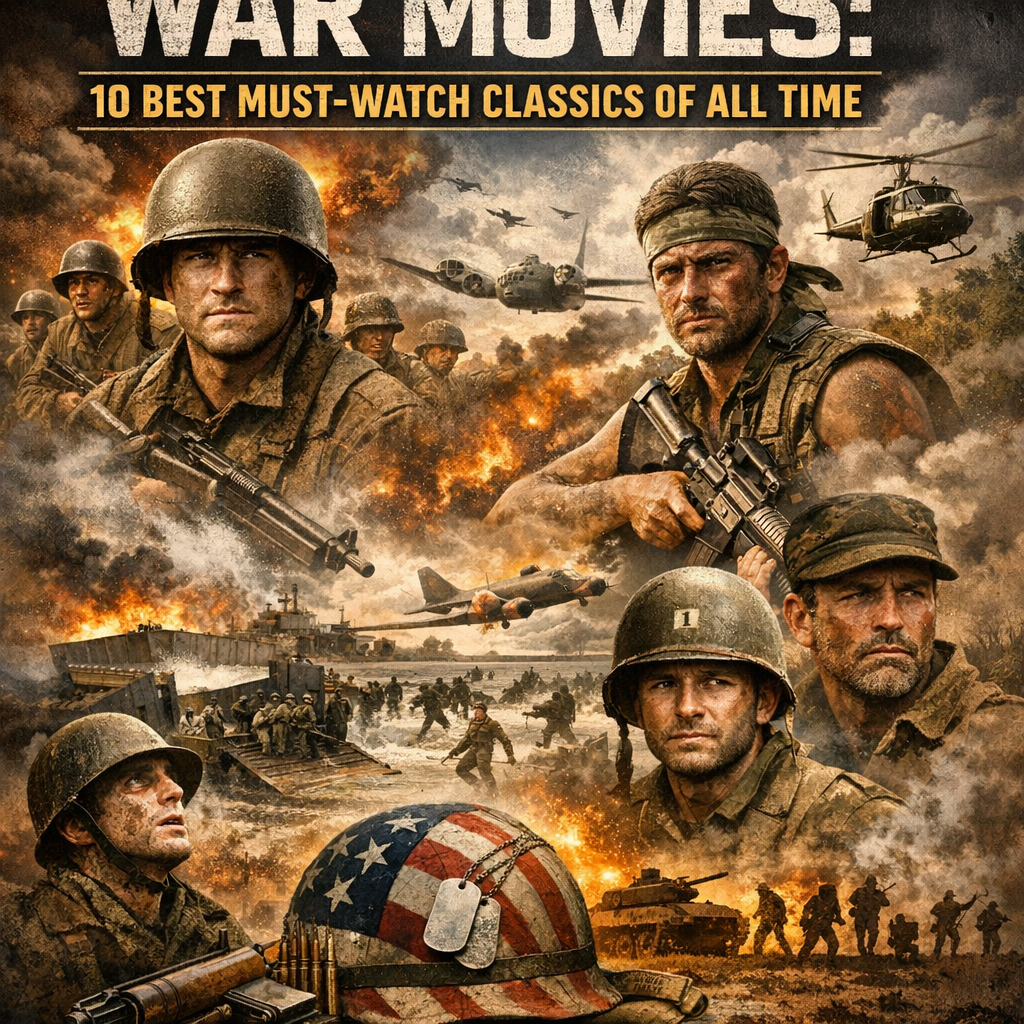
Great war movies are not simply about combat. They often reflect the politics, values, and anxieties of the era in which they were made. Some focus on heroism and duty, while others challenge the very idea of glory in battle. That range is part of what makes the genre so compelling. Whether set in the trenches of World War I, the chaos of Vietnam, or the beaches of Normandy, these films invite viewers to think about history through a deeply human lens.
Below are ten must-watch classics that helped define the genre and continue to influence filmmakers today.
10 classic war movies worth watching
1. All Quiet on the Western Front (1930)
Few films have delivered an anti-war message as powerfully as All Quiet on the Western Front. Based on Erich Maria Remarque’s novel, it follows a group of young German soldiers who enter World War I full of patriotic excitement, only to face the brutal reality of trench warfare.
What makes this film so enduring is its emotional honesty. It strips away any romantic idea of battle and shows how war destroys innocence, identity, and hope. Even by modern standards, its message remains strikingly effective.
2. The Bridge on the River Kwai (1957)
Directed by David Lean, this classic is a masterclass in tension, character conflict, and moral ambiguity. Set during World War II, it tells the story of British prisoners of war forced by the Japanese to build a railway bridge in Burma.
Alec Guinness delivers a remarkable performance as Colonel Nicholson, a man whose pride and discipline slowly blur into obsession. The film is suspenseful, beautifully shot, and intellectually rich, asking difficult questions about duty, ego, and collaboration under pressure.
3. Paths of Glory (1957)
Stanley Kubrick’s Paths of Glory is one of the sharpest critiques of military leadership ever put on screen. Set during World War I, it follows French soldiers ordered into a near-suicidal attack, and the aftermath when high-ranking officers seek scapegoats for the mission’s failure.
Kirk Douglas gives the film its moral center, but the real strength lies in Kubrick’s direction and the film’s refusal to flinch. It is not a comforting watch, but it is an essential one. This is a movie that exposes the cold machinery of war and the injustice often buried beneath official history.
4. Lawrence of Arabia (1962)
Epic in scale and unforgettable in style, Lawrence of Arabia remains one of cinema’s greatest achievements. The film follows T.E. Lawrence, the British officer who played a major role in the Arab Revolt during World War I.
Peter O’Toole’s performance is mesmerizing, and the sweeping desert cinematography is legendary. Yet the film’s brilliance goes beyond visual grandeur. It also explores identity, power, myth, and the psychological cost of becoming a symbol larger than oneself.
5. The Great Escape (1963)
Not every war film is centered on battlefield combat, and The Great Escape proves how thrilling the genre can be without relying on large-scale battles. Based on a true story, it follows Allied prisoners plotting an ambitious escape from a German POW camp.
With an outstanding ensemble cast including Steve McQueen, James Garner, and Richard Attenborough, the film balances suspense, camaraderie, and ingenuity. It’s entertaining from start to finish, but it also honors the resilience and determination of those who resisted captivity.
6. Patton (1970)
Patton stands out because it focuses so intensely on the contradictions of one man. George C. Scott gives a towering performance as General George S. Patton, portraying him as brilliant, theatrical, difficult, and deeply driven.
Rather than presenting a simple heroic portrait, the film examines the complexity of military leadership. Patton is charismatic and effective, but also impulsive and controversial. That layered approach gives the movie a depth that goes beyond battlefield strategy and makes it one of the most memorable biographical war dramas ever made.
7. Apocalypse Now (1979)
Francis Ford Coppola’s Apocalypse Now is less a conventional war film and more a descent into chaos, madness, and moral collapse. Loosely inspired by Joseph Conrad’s Heart of Darkness, the story follows Captain Willard on a mission through Vietnam to find and eliminate the rogue Colonel Kurtz.
The film is visually stunning, unsettling, and unforgettable. From the helicopter assault sequence to Marlon Brando’s haunting final scenes, every moment feels loaded with symbolism and psychological tension. It is one of the boldest and most ambitious depictions of modern warfare ever created.
8. Das Boot (1981)
This German masterpiece offers one of the most claustrophobic and realistic portrayals of wartime survival. Set aboard a U-boat during World War II, Das Boot places viewers in the cramped, tense, and dangerous environment of submarine combat.
What makes it exceptional is its focus on the ordinary sailors rather than political ideology. The men are exhausted, frightened, and trapped in a brutal system much larger than themselves. The film’s realism and relentless tension make it one of the strongest naval war stories in cinema history.
9. Saving Private Ryan (1998)
Steven Spielberg’s Saving Private Ryan changed the way many audiences experienced war on screen. Its opening D-Day sequence remains one of the most intense and realistic battle scenes ever filmed, placing viewers directly in the terror and confusion of the Normandy invasion.
But the film’s impact goes far beyond technical achievement. At its heart, it is about duty, sacrifice, and the value of a single human life amid unimaginable destruction. Tom Hanks anchors the story with quiet strength, making the emotional stakes feel personal and immediate.
10. The Thin Red Line (1998)
Released the same year as Saving Private Ryan, Terrence Malick’s The Thin Red Line offers a very different but equally powerful vision of war. Set during the Battle of Guadalcanal, it blends combat with philosophical reflection, meditating on nature, violence, fear, and mortality.
Its ensemble cast is impressive, but the film’s real identity comes from Malick’s poetic style. It asks not only what war does to soldiers, but what it reveals about humanity itself. For viewers looking for something contemplative and deeply emotional, this is an unforgettable choice.
What makes the best war movies timeless?
The most enduring war movies share a few key qualities. First, they take their characters seriously. Even in large-scale epics, the emotional truth of individual experience remains central. Second, they resist easy answers. War is rarely shown as simple or clean; it is messy, morally complicated, and often tragic. Finally, these films stay relevant because they connect history to universal human questions—about courage, fear, honor, trauma, and survival.
That is why these classics continue to resonate with new generations. They are not just about past conflicts. They are about people pushed to their limits, and about the choices they make when everything is at stake.
Final thoughts on classic war movies
For anyone exploring the genre, these ten films offer an outstanding place to start. Together, they show the many faces of war on screen: epic, intimate, inspiring, horrifying, and reflective. Some highlight bravery and endurance, while others challenge myths and expose the devastating cost of violence.
The finest war movies leave a lasting impression not because they glorify conflict, but because they help us understand it. That ability to entertain, educate, and provoke thought is what makes these classics worth revisiting again and again.
